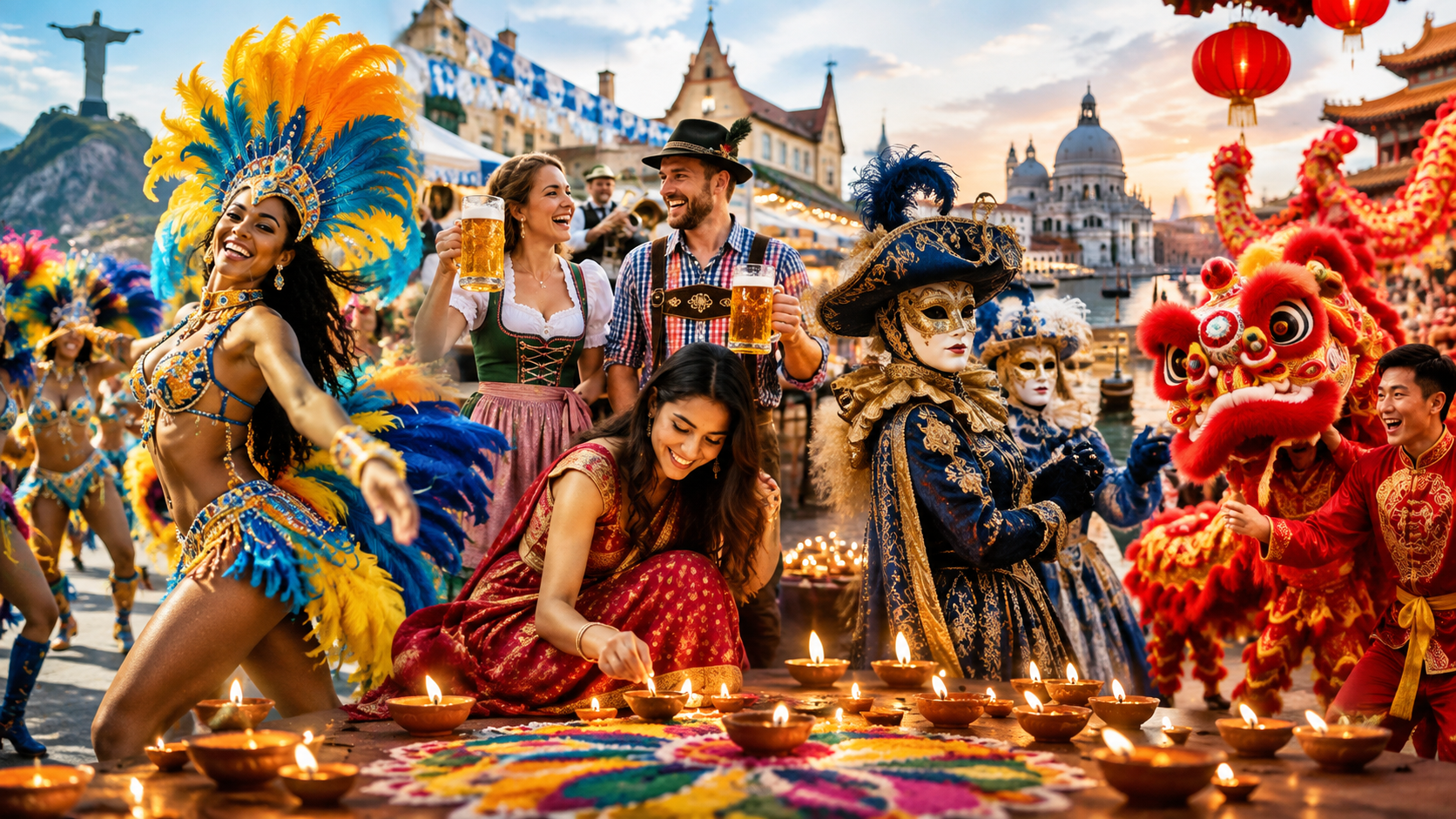
Cultural festivals essentially serve as the vibrant, rhythmic heartbeats of diverse global societies, offering deeply curious travelers an incredibly unique, highly unfiltered insight into the ancient traditions, profound religious beliefs, and complex daily customs that fundamentally shape local communities. These massive, highly energetic global celebrations very often heavily feature incredibly vibrant street parades, heart-pounding traditional music, intricate folk dance, stunningly elaborate handmade costumes, and mouth-watering regional cuisine that you simply cannot find in a typical restaurant. Whether you are already a highly seasoned, rugged international traveler or simply someone who deeply enjoys passionately learning about vastly different global cultures from the quiet comfort of your own home, choosing to physically experience these massive global festivals can easily become a profoundly life-changing, perspective-shifting adventure. Ranging from deeply spiritual gatherings to massive, city-wide parties, here are some of the absolute most incredible, awe-inspiring cultural festivals around the world that you absolutely must experience at least once in your lifetime.
Rio Carnival, Brazil
History and Significance
The legendary Rio Carnival, held annually in the incredibly vibrant, deeply passionate coastal city of Rio de Janeiro, is officially and universally recognized as the absolute largest, most energetic carnival celebration in the entire world, regularly attracting millions of enthusiastic international visitors and eager locals every single year. This spectacularly massive, colorful festival dates all the way back to the early 18th century, originally stemming from early Portuguese colonial settlers who eagerly introduced the strict, historical European tradition of celebrating and feasting heavily just before the solemn, fasting period of Lent officially begins.
Highlights
- Samba Parades: The absolute, undisputed crown jewel of the entire massive carnival is the highly competitive, incredibly fiercely contested samba parades held inside the massive Sambadrome stadium, where massive local samba schools aggressively compete against each other in deeply elaborate, highly choreographed, and wildly colorful performances.
- Street Parties: Affectionately known locally as “blocos,” these massive, highly spontaneous, and deeply chaotic street parties effectively fill the entire sprawling city with deafeningly loud live music, relentless dancing, and deeply joyous, highly infectious community celebrations.
- Costumes and Masks: Highly dedicated participants don incredibly elaborate, deeply heavy, and sparkling costumes and feathered masks, significantly adding to the festival’s deeply vibrant, highly energetic, and overwhelmingly visual atmosphere.
Diwali, India
History and Significance
Diwali, famously and universally known globally as the spectacular Festival of Lights, stands proudly as one of the absolute most critical, highly anticipated, and deeply significant Hindu festivals in the entire world, powerfully symbolizing the ultimate, inevitable spiritual victory of radiant light over deep darkness and profound good over persistent evil. Traditionally celebrated with immense joy and deep reverence over five consecutive days, Diwali specifically marks the highly triumphant, celebrated return of the revered Lord Rama, his wife Sita, and his brother Lakshmana to their home kingdom of Ayodhya after enduring a brutal 14 years of forced exile, as beautifully narrated in the ancient, highly sacred Indian epic poem, the Ramayana.
Highlights
- Lighting of Diyas: Millions of private homes, bustling public spaces, and sacred temples are absolutely beautifully adorned with countless flickering, traditional clay oil lamps (called diyas) and modern candles, effectively creating a deeply mesmerizing, highly spiritual, and deeply calming golden glow across the entire country.
- Fireworks: Absolutely massive, deafeningly loud, and visually spectacular professional and amateur fireworks displays brilliantly light up the dark night sky for days, violently and loudly symbolizing the ultimate, joyful triumph of bright light over dark ignorance.
- Rangoli Designs: Incredibly intricate, highly complex, and deeply colorful rangoli geometric patterns, painstakingly made by hand from vibrantly colored powders, bright flower petals, and dyed rice, beautifully decorate the front entrances of almost all traditional Indian homes to welcome prosperity and the goddess Lakshmi.
Oktoberfest, Germany
History and Significance
Oktoberfest, held annually in the deeply historic, culturally rich Bavarian city of Munich, is universally celebrated as the absolute largest, most heavily attended traditional beer festival and traveling funfair in the entire world. The massive, highly anticipated event dates all the way back to October 1810, when it was first joyously celebrated by the local citizens to publicly honor the high-profile royal marriage of Crown Prince Ludwig to the beloved Princess Therese of Saxony-Hildburghausen. Today, this massive, highly energetic 16-to-18-day cultural festival routinely attracts millions of highly dedicated beer enthusiasts and curious international tourists from virtually every corner of the globe.
Highlights
- Beer Tents: The massive festival grounds prominently feature over 30 incredibly large, highly decorated, and densely packed beer tents that proudly serve a massive variety of highly potent, locally brewed traditional German beers, with each specific tent loudly boasting its own entirely unique, highly energetic, and sometimes rowdy atmosphere.
- Traditional Music and Dance: Live, incredibly loud, and highly enthusiastic traditional Bavarian brass band music and highly energetic, foot-stomping folk dances significantly add to the deeply festive, highly authentic German cultural ambiance.
- Traditional Attire: A massive majority of both the enthusiastic local attendees and eager international tourists proudly choose to wear highly traditional, deeply authentic Bavarian outfits, with men sporting heavy leather lederhosen and women wearing highly detailed, colorful dirndl dresses.
Carnival of Venice, Italy
History and Significance
The world-famous Carnival of Venice (Carnevale di Venezia), with its deep, incredibly rich historical origins tracing all the way back to a massive military victory in the 12th century, is globally renowned for its incredibly elaborate, highly detailed, and often deeply unsettling traditional porcelain masks and historically accurate Renaissance costumes. This deeply unique, highly atmospheric festival is a magical time of incredible opulence, deep romantic mystery, and highly theatrical celebration, specifically designed to celebrate the incredible, complex history and unmatched, rich artistic culture of the floating city of Venice.
Highlights
- Masquerade Balls: Highly exclusive, incredibly elegant, and wildly expensive private masquerade balls and high-society parties, where wealthy international guests wear highly intricate, incredibly beautiful masks, are an absolute key, highly anticipated feature of the festival.
- Grand Parade: A deeply impressive, massive, and highly visual grand parade featuring thousands of fully costumed, highly theatrical participants takes place proudly in the deeply historic, incredibly crowded St. Mark’s Square (Piazza San Marco).
- Art and Theater: The massive, city-wide festival also heavily includes various high-end art exhibitions, deeply dramatic street theatrical performances, and highly classical music concerts held in ancient, deeply historic Venetian palazzos.
Chinese New Year, China
History and Significance
Chinese New Year, which is also very frequently known locally as the Spring Festival, is undeniably the absolute most critically important, highly celebrated, and deeply traditional Chinese cultural holiday, loudly and joyously celebrating the official beginning of the new traditional lunar calendar year. This massive, highly significant festival, which proudly boasts an incredibly deep, complex history spanning well over 4,000 years of continuous human civilization, is heavily steeped in highly specific, deeply respected ancient customs and highly symbolic family traditions.
Highlights
- Lion and Dragon Dances: Highly energetic, deeply acrobatic, and incredibly colorful street performances featuring massive, multi-person lion and dragon puppets are specifically designed to physically bring good fortune and loudly, aggressively chase away lingering evil spirits.
- Family Reunions: It is fundamentally a highly critical, deeply respected time for massive, extended families to travel vast distances to finally come together, share highly symbolic, incredibly elaborate traditional meals, and deeply celebrate their shared family heritage.
- Firecrackers and Red Decorations: Millions of incredibly loud, highly explosive firecrackers are constantly set off to literally scare and ward off evil spirits, and virtually the entire massive country is covered in bright, highly vibrant red decorations, as the specific color deeply symbolizes massive financial prosperity and intense good luck.
Final Words
Ultimately, making the conscious, highly deliberate decision to physically travel and deeply experience these massive cultural festivals around the world offers an incredibly unique, highly invaluable opportunity to completely immerse oneself in the sheer richness, intense beauty, and massive diversity of deep human traditions. These highly energetic, deeply moving global festivals not only loudly celebrate the specific, ancient heritage and unique customs of their respective local cultures, but they also actively, successfully foster a profound sense of global unity, deep mutual understanding, and massive, infectious joy among both the dedicated local participants and the eager international spectators alike. Whether it’s aggressively dancing the infectious samba in the crowded streets of Rio, quietly and respectfully lighting clay diyas during Diwali, or loudly sipping heavy local beer at Oktoberfest, each deeply unique festival reliably provides absolutely unforgettable, lifelong memories and a much deeper, more nuanced appreciation for the incredibly complex tapestry of global culture.
FAQs
1. What is the best time to visit Rio Carnival?
The massive, highly anticipated Rio Carnival usually takes place either in late February or early March, depending entirely on exactly when the fluid holiday of Easter falls on the calendar each year. It is absolutely best to meticulously plan your complex trip and book highly expensive flights heavily around these specific months to fully experience the festivities.
2. How long does Diwali last?
The spectacular, deeply spiritual festival of Diwali is traditionally and highly joyously celebrated over the course of five consecutive days, with each specific day having its own deeply unique, highly specific religious significance, complex rituals, and deep cultural meaning.
3. Is Oktoberfest family-friendly?
Yes, surprisingly, the massive Oktoberfest offers a very wide, highly diverse variety of daytime, highly family-friendly activities, heavily including massive carnival rides, traditional fairground games, and colorful daytime parades. There are also specific, quieter tents explicitly designed for families.
4. Do I need a costume to participate in the Carnival of Venice?
While it is absolutely not strictly mandatory for casual street tourists, wearing a highly detailed, historically accurate costume and a traditional Venetian mask significantly enhances the entire experience and allows you to deeply, fully participate in the festival’s deeply historical spirit.
5. What are some traditional foods eaten during Chinese New Year?
Highly traditional, deeply symbolic foods heavily include steamed pork dumplings, fried spring rolls, whole steamed fish, and sweet, sticky glutinous rice cakes (known as nian gao), with each specific dish deeply symbolizing vastly different aspects of future financial prosperity and good fortune.