
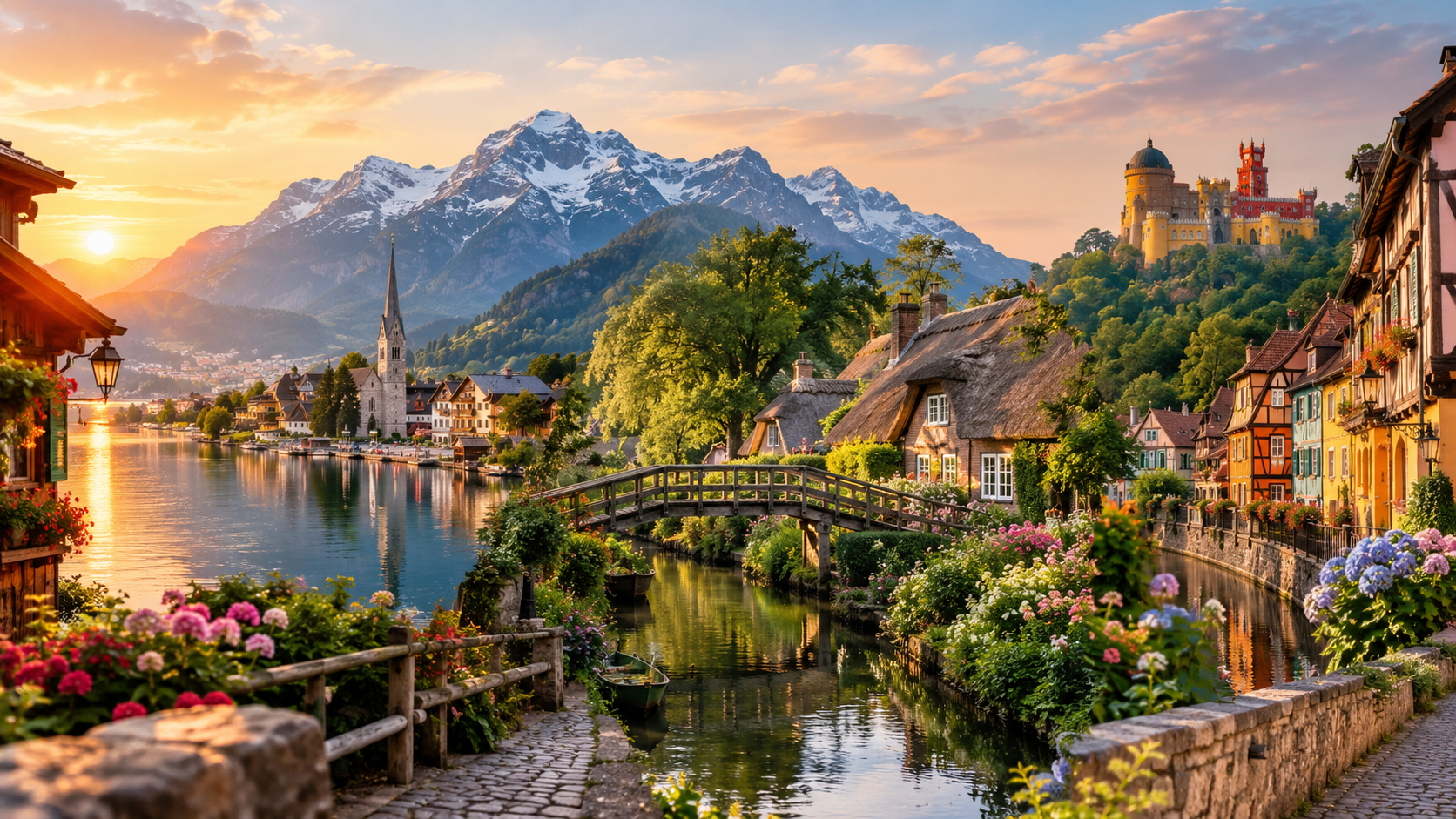
When most travelers envision a classic vacation to Europe, their minds instinctively conjure up images of heavily crowded, bustling capital cities like Paris, Rome, London, and Barcelona. While these world-famous urban centers undeniably offer incredible historical landmarks and world-class museums, they often heavily steal the international spotlight from the continent’s quieter, more intimate destinations. Scattered across the continent are countless deeply charming, largely undiscovered, and highly underrated lesser-known villages patiently waiting to be explored by adventurous travelers. These spectacular hidden gems offer weary tourists a desperately needed, refreshing chance to escape the overwhelming summer crowds, bypass the overpriced tourist traps, and truly immerse themselves in a vastly more authentic, slower-paced local culture. Ranging from deeply tranquil, canal-lined coastal towns to dramatically historic mountain villages, here are some incredibly underrated European villages that absolutely deserve a prime spot on your upcoming 2026 travel itinerary.
Hallstatt, Austria
Dramatically and beautifully nestled deep amidst the towering, snow-capped peaks of the stunning Austrian Alps, the incredibly historic village of Hallstatt is an absolute postcard-perfect alpine destination that looks as though it was pulled directly from the illustrated pages of an old European fairytale. Known historically for its ancient, highly lucrative salt production that dates back thousands of years, this deeply charming, isolated village clings precariously to a narrow, steep sliver of land situated right between the dark, glassy waters of Lake Hallstatt and the imposing, jagged Dachstein mountains towering directly behind it. With its incredibly vibrant, multi-colored 16th-century Alpine houses, completely idyllic lakefront setting, and flower-box-lined wooden balconies, Hallstatt offers truly breathtaking, panoramic views at absolutely every single turn.
Eager visitors can happily spend their days leisurely exploring the village’s incredibly narrow, winding cobblestone streets, aggressively hiking the steep, nearby mountain trails to discover hidden alpine waterfalls, or visiting the somewhat macabre but historically fascinating Charnel House (Bone House) located near the picturesque Catholic Church. For a truly unforgettable, deeply romantic experience, tourists should absolutely rent a small, electric wooden boat to quietly navigate the pristine, mirror-like waters of Lake Hallstatt during the early morning hours before the day-trippers arrive, allowing them to fully absorb the overwhelming, majestic beauty of this deeply historic Austrian treasure.
Giethoorn, Netherlands
Affectionately and accurately dubbed the “Venice of the North” by captivated visitors, Giethoorn is a remarkably quaint, deeply peaceful village located in the northeastern Dutch province of Overijssel. This stunningly unique village is entirely famous worldwide for its complete lack of traditional roads in the historic center. Instead of noisy cars and busy asphalt streets, the village is brilliantly connected by an intricate, peaceful network of narrow, hand-dug canals, over 170 highly picturesque, arching wooden footbridges, and miles of shaded bicycle paths. The charming, immaculately kept farmhouses, many of which proudly feature traditional, centuries-old thatched roofs, are built on small, individual peat islands, adding to the incredible, storybook atmosphere of the settlement.
The absolute best, most authentic way to thoroughly explore Giethoorn is to slowly navigate the peaceful waterways by renting a traditional, electric-powered “whisper boat” or a sturdy canoe. Gliding silently through the narrow canals, visitors can closely admire the incredibly manicured, vibrant flower gardens and the charming waterfront cottages. For those who prefer to remain firmly on dry land, you can easily stroll along the deeply peaceful, tree-lined pedestrian paths or simply relax on a waterfront terrace with a slice of traditional Dutch apple pie and take in the profoundly serene, almost totally silent atmosphere. Giethoorn offers a highly necessary, incredibly peaceful retreat from the relentless hustle, aggressive noise, and deep stress of modern urban life.
Bibury, England
Beautifully located deep in the very heart of the rolling, green hills of the famous Cotswolds region, Bibury is universally considered the absolute quintessential, picture-perfect traditional English village. Famously described by the legendary 19th-century artist and writer William Morris as “the most beautiful village in England,” Bibury is world-renowned for its deeply picturesque, honey-colored stone cottages, its incredibly lush, overgrown green meadows, and the crystal-clear waters of the River Coln that peacefully wind their way directly through the center of town. It is a place where time seems to have completely and stubbornly stood still for hundreds of years.
Visitors can happily wander aimlessly through the village’s incredibly charming, quiet streets, eventually finding their way to the highly photographed, historic Arlington Row. This iconic, instantly recognizable row of steep-roofed, 14th-century weaver’s cottages is so historically significant that it is actually featured on the inside cover of all United Kingdom passports. Beyond the famous cottages, visitors can explore the nearby, pristine English countryside on foot or by renting a sturdy bicycle, perhaps stopping for a traditional, hearty pub lunch in a centuries-old tavern. With its undeniable timeless beauty and profoundly peaceful, rural ambiance, Bibury remains a spectacular hidden gem just waiting to be discovered by those seeking authentic British charm.
Colmar, France
Strategically situated right on the border of Germany in the deeply historic, culturally blended Alsace region of northeastern France, Colmar is a spectacular, romantic storybook village deeply known for its incredibly well-preserved, highly detailed medieval and early Renaissance architecture. Because the town miraculously survived the heavy bombings of World War II largely intact, visitors today are treated to an absolute visual feast of incredibly colorful, heavily detailed half-timbered houses, ancient cobblestone plazas, and narrow, twisting alleyways that look like a Hollywood movie set.
Visitors can leisurely stroll through the incredibly charming, pedestrian-only streets of the Old Town, actively exploring the deeply romantic district affectionately known as “Little Venice.” Here, highly picturesque, flower-lined canals slowly wind their way past brightly painted, centuries-old merchant houses. Furthermore, because Colmar is proudly considered the unofficial capital of the famous Alsatian wine route, travelers absolutely must take the time to sample the region’s world-famous, crisp white wines, such as Riesling and Gewürztraminer, directly at one of the many historic, family-owned wineries located in the immediate area. With its incredibly rich, complex history and undeniable romantic ambiance, Colmar is a true, vibrant hidden treasure of Western Europe.
Sintra, Portugal
While located just a relatively short, convenient train ride away from the bustling capital city of Lisbon, the deeply magical village of Sintra feels as though it exists in an entirely different, incredibly mystical universe. Nestled high in the cooling, lush, pine-covered hills of the Serra de Sintra, this heavily forested, aristocratic retreat has historically served as the preferred summer sanctuary for Portuguese royalty seeking to escape the sweltering city heat. Today, Sintra is globally renowned for its incredibly concentrated collection of whimsical, brightly colored fairytale castles, deeply lush, exotic botanical gardens, and absolutely stunning, high-altitude ocean vistas.
Eager visitors can spend days thoroughly exploring the highly elaborate, UNESCO-listed Pena Palace, an incredibly brightly painted, Romanticist castle that sits proudly atop the highest peak, visible for miles around. Beyond the main palace, the area is overflowing with heavily enchanting, deeply mysterious sights, such as the Initiation Well hidden deep within the forested grounds of the Quinta da Regaleira, and the ancient, ruined stone walls of the 8th-century Moorish Castle. Whether you choose to wander through the enchanting, misty forests or simply relax in the historic village center tasting traditional local pastries like Queijadas, Sintra’s otherworldly beauty and deeply mystical atmosphere are absolutely sure to permanently capture the hearts of all who visit.
Final Words
While the vast continent of Europe is undeniably home to countless massive, iconic capital cities and world-famous, heavily crowded tourist attractions, taking the time to seek out its spectacular, lesser-known villages offers a rare, invaluable glimpse into a vastly more peaceful, deeply authentic, and highly traditional way of daily life. From the dramatic, snow-capped, jagged peaks of the remote Austrian Alps to the sun-drenched, heavily forested, romantic hills of the Portuguese coast, these highly underrated, spectacular European villages are absolutely guaranteed to deeply enchant, profoundly inspire, and completely rejuvenate weary travelers arriving from all around the world in 2026.
Frequently Asked Questions
1. Are these villages easily accessible by public transportation?
Yes, fortunately, the vast majority of these deeply historic European villages are incredibly well-connected to major regional hubs by highly reliable, efficient national train networks, regional bus routes, or, in the case of Giethoorn, even by local boat services. This robust public infrastructure makes them remarkably easily accessible for international travelers who explicitly choose not to rent an expensive car during their vacation.
2. Is English widely spoken in these villages?
While English may absolutely not be quite as incredibly prevalent or natively spoken as it heavily is in larger, international capital cities like London or Berlin, you will comfortably find that many locals working in these villages do speak a highly functional, polite level of conversational English, especially those directly employed within the hospitality and tourist areas.
3. Are these villages crowded with tourists?
Unlike massive, heavily congested major European tourist destinations like Venice or Paris, these highly underrated, smaller villages typically receive significantly fewer international visitors overall. This drastic reduction in heavy foot traffic naturally allows for a vastly more peaceful, deeply relaxing, and highly authentic cultural experience for those willing to travel off the beaten path.
4. What is the best time of year to visit these villages?
While the absolute best time to visit deeply depends on your own specific personal weather preferences, the transitional shoulder seasons of spring (May) and autumn (September to October) are generally considered highly ideal. During these specific months, travelers can consistently enjoy incredibly mild, comfortable weather and vastly fewer crowds compared to the peak summer rush.
5. Are there accommodations available in these villages?
Yes, absolutely. Despite their relatively small, historical size, most of these highly picturesque villages comfortably offer a surprisingly wide, diverse range of local accommodations. Visitors can easily find everything from high-end boutique hotels and deeply charming, traditional bed and breakfasts to spacious, private vacation rentals, perfectly suiting absolutely every travel budget and personal preference.