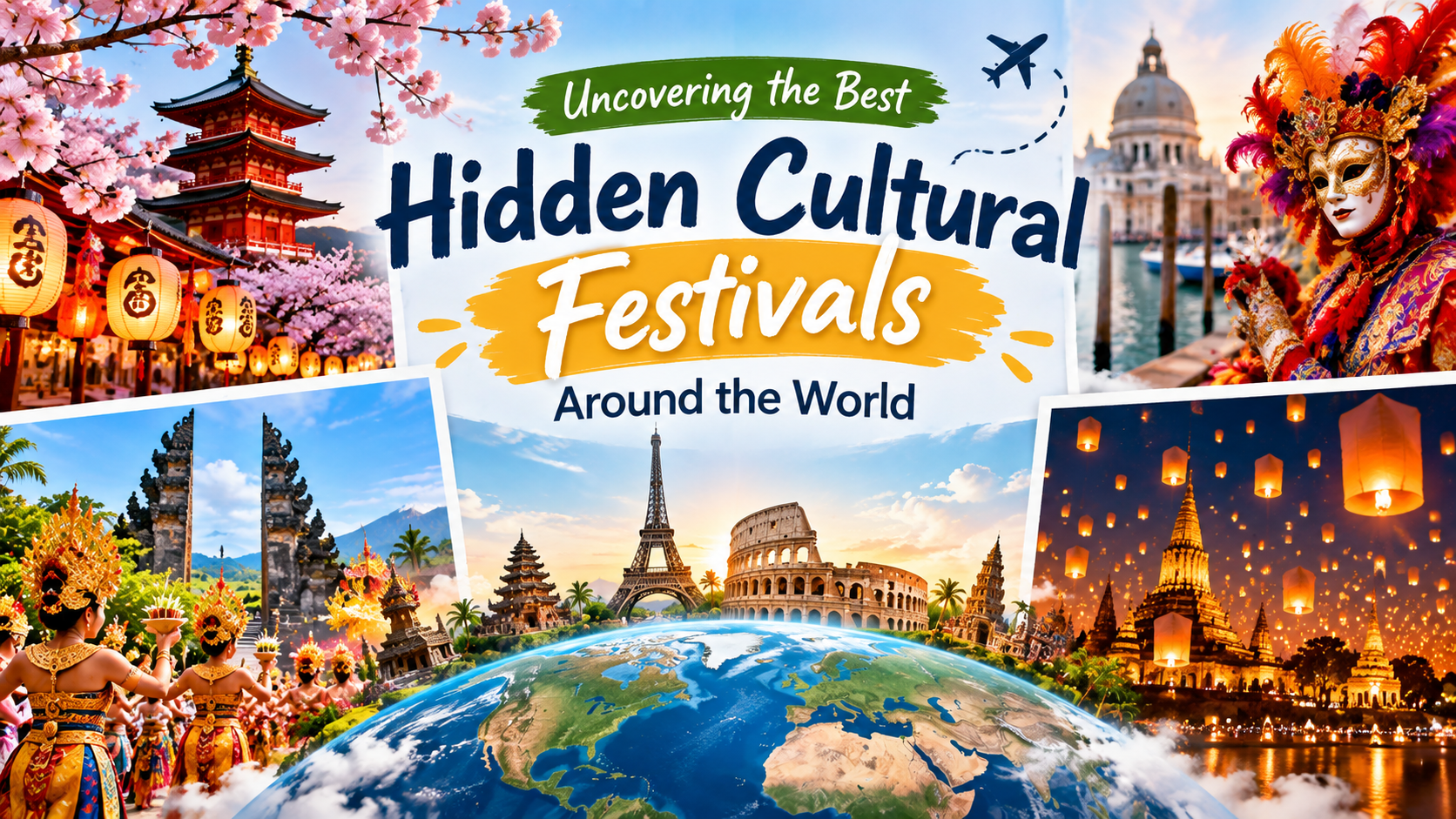
Cultural festivals essentially offer a profound, unscripted window directly into the collective soul of a local community, vibrantly showcasing deeply held traditions, ancient spiritual rituals, and joyous communal celebrations that have been faithfully passed down through countless generations. While massive, highly commercialized mega-events like the vibrant Rio Carnival in Brazil, the colorful Holi festival in India, and the beer-soaked Oktoberfest in Germany are globally renowned and attract millions of international tourists annually, there are simultaneously numerous hidden cultural gems scattered across the globe that remain relatively unknown to mainstream tourism. These deeply authentic, localized festivals, which are often passionately celebrated in remote rural villages or lesser-visited regional areas, offer a truly authentic, unfiltered glimpse into the incredibly diverse, complex tapestry of human culture and history. In this comprehensive travel guide, we will excitedly uncover and explore some of these spectacular, hidden cultural festivals actively taking place around the world.
Asia
Tsagaan Sar – Mongolia
Tsagaan Sar, which directly translates to the “White Moon,” serves as the official Mongolian Lunar New Year and easily stands as one of the absolute most important, highly revered traditional festivals celebrated in all of Mongolia. Usually taking place between late January and early February, depending on the complex calculations of the traditional lunar calendar, this incredible, multi-day festival joyously marks the bitter end of a harsh, unforgiving nomadic winter and warmly welcomes the hopeful, prosperous beginning of a brand new year. During this highly significant time, extended nomadic families proudly come together from across the vast, frozen steppes to joyfully reunite and feast heavily on deeply traditional, highly symbolic foods such as buuz, which are large, steaming mutton dumplings representing wealth and familial unity.
The intricate exchanges of highly symbolic, meaningful gifts, such as blue silk scarves called khadag, and formal, respectful well-wishes between the younger and older generations are incredibly common and strictly observed. Beyond the massive feasts, the festival also deeply involves various complex, shamanistic and Buddhist rituals specifically designed to respectfully honor deceased ancestors and local mountain spirits, making Tsagaan Sar a deeply spiritual, highly familial event that beautifully reinforces the strong bonds of Mongolian society.
Songkran – Thailand
While the spectacular festival of Songkran is undeniably well-known throughout the region of Southeast Asia, the true, deeply traditional essence of the holiday remarkably remains relatively hidden from the mainstream global understanding, which often just views it as a giant street party. This deeply significant Thai New Year festival, officially held annually in mid-April during the absolute hottest time of the year, is most famous globally for its massive, country-wide water fights. However, originally originating from the highly respectful, quiet Buddhist practice of gently pouring scented water over ancient Buddha statues and the hands of respected elders to ask for spiritual blessings, Songkran has dynamically evolved into a vibrant, nationwide celebration of cleansing and renewal.
Today, entire city streets dramatically turn into massive, joyous battlegrounds of fun, with exuberant locals and delighted tourists alike eagerly participating in chaotic, multi-day water-splashing festivities using buckets, hoses, and water guns. Despite the modern chaos, the core underlying meaning remains intact; the splashing of water deeply symbolizes the spiritual, physical washing away of accumulated sins, bad luck, and negative energy from the previous year, leaving everyone fully purified and ready for a fresh start.
Europe
Ivrea Orange Festival – Italy
In the small, picturesque Northern Italian town of Ivrea, a completely unique, wildly vibrant, and highly unusual historical festival takes place over several days each February – the infamous Battle of the Oranges. This massive, meticulously organized historic event dramatically reenacts a legendary medieval uprising and bloody battle by dividing the town’s citizens into nine distinct, fiercely loyal teams and having them pelt each other relentlessly with hundreds of thousands of ripe oranges. Deeply rooted in a local 12th-century legend involving a brave miller’s daughter who defied a tyrannical local duke, the festival powerfully symbolizes the eternal fight for civic liberty and freedom against oppressive rulers.
During the intense, three-day battle, the narrow cobblestone streets of Ivrea are completely filled with the overwhelming, sweet scent of crushed citrus and the deafening sounds of collective laughter, cheering, and intense revelry as the townspeople passionately engage in this friendly but remarkably intense fruit battle. The sheer scale of the event is awe-inspiring, requiring massive coordination and leaving the streets ankle-deep in orange pulp before the final cleanup.
Jarramplas – Spain
The bizarre, fascinating Jarramplas festival, proudly celebrated in the tiny rural village of Piornal in the Extremadura region of Spain, is an incredibly intriguing, chaotic event where a brave local volunteer, heavily dressed as a terrifying mythical figure known as Jarramplas, aggressively parades through the narrow village streets while thousands of local townspeople ruthlessly throw rock-hard turnips at him. Held annually in the freezing cold of January, this intense festival is a true, grueling test of extreme physical endurance and personal bravery for the heavily armored participant playing the role of Jarramplas, who considers it a massive local honor.
The exact historical origins of the festival are deeply shrouded in mystery and local folklore, but it is widely believed by local historians to have strong, direct connections to ancient pagan agricultural rites, the symbolic driving out of evil winter spirits, or perhaps the historical punishment of a local cattle thief. Regardless of its true origin, it survives today as a wildly vibrant, chaotic expression of intense local identity, unbreakable communal spirit, and shared historical continuity.
Africa
Gerewol Festival – Chad
The Gerewol Festival is an absolutely mesmerizing, visually stunning traditional courtship ritual passionately celebrated by the nomadic Wodaabe tribe in the remote Sahel region of Chad. Taking place annually immediately following the conclusion of the rainy season in September, the festival is a massive, week-long desert gathering where hundreds of young, eligible men spend countless hours meticulously adorning themselves with incredibly elaborate, brightly colored facial makeup, traditional beads, and ornate attire specifically designed to deeply impress potential brides.
The absolute undisputed highlight of the gathering is the Yaake dance, a highly competitive, rhythmic performance where the male participants stand shoulder-to-shoulder and are strictly judged by the young women of the tribe on their facial beauty, the whiteness of their teeth, the brightness of their eyes, their intricate dance moves, and their overall personal charm. Gerewol is a profoundly colorful, incredibly lively, and entirely unique celebration of human love, physical beauty, and deep cultural pride that stands completely apart from typical Western courtship traditions.
Timkat – Ethiopia
Timkat, the deeply revered Ethiopian Orthodox Christian celebration of the Epiphany, is a truly spectacular, incredibly colorful spiritual festival held annually across the country in late January. The massive, highly coordinated three-day event formally commemorates the historical baptism of Jesus Christ in the Jordan River and deeply involves a continuous, mesmerizing series of large-scale public processions, overnight vigils, collective prayers, and dramatic religious re-enactments. The absolute highlight of the festival is the final, communal blessing of the water by high-ranking priests, which is then joyously splashed onto the massive crowds of faithful attendees to symbolically renew their own baptismal vows.
The incredibly vibrant, slow-moving street processions, featuring thousands of devoted priests carrying heavy, ornate replicas of the sacred Ark of the Covenant on their heads, are beautifully accompanied by rhythmic drumming, chanting, and traditional religious dance. This creates a deeply spiritual, highly emotional, and visually stunning communal experience that attracts thousands of pilgrims from across the nation.
South America
Puno Week – Peru
Puno Week, enthusiastically celebrated every single November in the high-altitude Peruvian city of Puno sitting on the shores of Lake Titicaca, is a wildly vibrant, massive regional festival that proudly honors the mythological founding of the mighty Inca Empire. The undisputed centerpiece and highlight of the week-long celebration is the elaborate, dramatic theatrical reenactment of the legendary arrival of the very first Inca king, Manco Cápac, and his sister-wife, Mama Ocllo, who, according to local legend, magically emerged directly from the deep, frigid waters of Lake Titicaca to civilize the Andean people.
The expansive festival features days of non-stop traditional Andean music, chaotic, rhythmic street dance competitions, and incredibly elaborate, handcrafted traditional costumes showcasing the deeply rich, highly complex cultural heritage of the indigenous Andean people. Puno Week is vastly more than just a party; it is a profound, deeply emotional celebration of ancient history, surviving indigenous identity, and fierce regional pride that continues to thrive in the modern era.
Final Words
These phenomenal, largely hidden cultural festivals offer a truly unique, highly rewarding opportunity for adventurous travelers to deeply explore, actively participate in, and genuinely appreciate the incredibly rich, stunning diversity of global human traditions. They actively provide a vital, living window into the collective soul of marginalized or isolated communities, actively preserving ancient, fragile rituals and successfully fostering a powerful sense of local identity and historical continuity in an increasingly homogenized world. By boldly venturing far off the heavily beaten tourist path to respectfully experience these incredible festivals firsthand, dedicated travelers can consistently gain a much deeper, more nuanced understanding of the world’s vast cultural heritage and the deeply universal human spirit of joyful celebration.
FAQs
1. What is the significance of Tsagaan Sar in Mongolia?
Tsagaan Sar, formally known as the Mongolian Lunar New Year, joyously marks the harsh end of the long winter and the hopeful start of a prosperous new year. It is an incredibly important cultural time dedicated strictly to large family reunions, heavy traditional feasting, paying deep respect to elders, and conducting spiritual rituals to honor deceased ancestors.
2. Why do people throw oranges during the Ivrea Orange Festival in Italy?
The massive, chaotic Battle of the Oranges held in Ivrea deeply symbolizes the town’s historical fight for civic liberty and freedom against a cruel, tyrannical medieval ruler. It serves as a large-scale, highly physical reenactment of a medieval civilian uprising, where eager participants throw thousands of oranges to accurately represent the stones and weapons used by the revolting peasants.
3. What is the purpose of the Gerewol Festival in Chad?
The Gerewol Festival is a highly formalized, deeply traditional courtship ritual utilized by the nomadic Wodaabe tribe. During the week-long event, young, unmarried Wodaabe men dress incredibly elaborately and perform highly specific, rhythmic dances to actively impress potential brides, serving as a massive celebration of male physical beauty and romantic love.
4. How is Timkat celebrated in Ethiopia?
Timkat, which is the official Ethiopian Orthodox celebration of the Epiphany, heavily involves massive, highly coordinated street processions, overnight religious vigils, collective prayers, and the ceremonial blessing of public water. It serves to deeply commemorate the historical baptism of Jesus Christ, with priests carrying sacred replicas of the Ark of the Covenant.
5. When is Puno Week celebrated in Peru and what does it commemorate?
Puno Week is enthusiastically celebrated every single November in the city of Puno. The massive festival proudly honors the mythological founding of the ancient Inca Empire, featuring elaborate, theatrical reenactments of the first Inca king emerging from Lake Titicaca, accompanied by days of traditional music, dance, and colorful costumes.