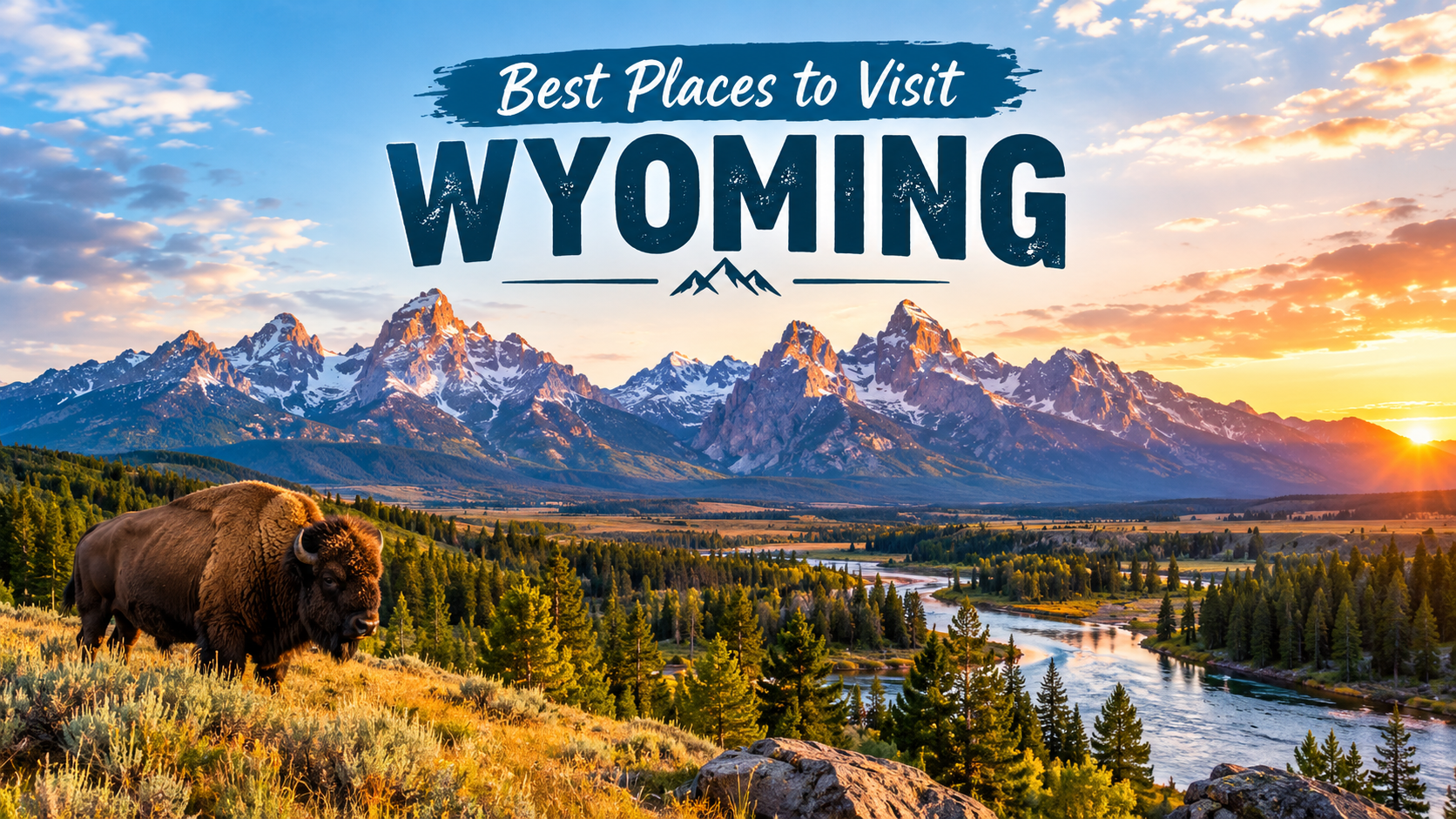
Every year, millions of travelers journey to Wyoming to experience some of the most dramatic mountain wilderness in North America. Wyoming encompasses vast mountain ranges, deep river canyons, historic frontier settlements, and pristine backcountry valleys where you can explore for days in tranquil solitude.
From spectacular mountain highways to secluded historic ghost towns, here are the ten best places to visit in Wyoming for an unforgettable outdoor journey.
1. Beartooth Mountains
Rising dramatically to elevations near thirteen thousand feet along Wyoming’s northern border, the Beartooth Mountains represent one of the most rugged alpine landscapes in the country. Dotted with sparkling glacial lakes and windswept tundra, this majestic range offers wilderness exploration at its purest.
The crown jewel is the famed Beartooth Highway (U.S. Route 212), celebrated as one of the most scenic drives in America. Because it sits just outside Yellowstone’s Northeast Entrance, many road-trippers pass by without realizing what they missed. Driving this high-altitude route is an essential highlight of northern Wyoming.
2. Grand Teton National Park
Few mountain ranges are as instantly recognizable as the Tetons. Rising abruptly from the sagebrush plains of the Jackson Hole valley without foothills, the jagged granite peaks create a breathtaking panorama of rock and ice. While Grand Teton National Park is on nearly every itinerary, smart planning elevates your visit.
To escape summer crowds around Jenny Lake, venture slightly farther north. String Lake provides clear waters perfect for paddleboarding, while an easy shoreline trail leads to peaceful Leigh Lake. Hikers can head up Paintbrush Canyon for sweeping alpine views and a quintessential Teton wilderness experience.
3. Wind River Range
For backpackers and solitude seekers, the Wind River Range is widely considered the finest hidden mountain paradise in the Rockies. The Winds contain more than forty peaks exceeding 13,000 feet alongside active glaciers.
What preserves this range’s wild character is its complete lack of motorized roads. Most trails require round trips of thirty miles or more, making multi-day backpacking necessary to reach remote alpine cirques like the famous Cirque of the Towers. Casual visitors can still experience the range’s grandeur at Green River Lakes. This pristine turquoise lake mirrors dramatic Squaretop Mountain with accessible day hiking trails.
4. Bighorn Canyon National Recreation Area
Straddling the border between northern Wyoming and southern Montana, Bighorn Canyon National Recreation Area features dramatic geological contrasts where arid desert meets sheer canyon walls. The Bighorn River carves a winding ribbon through limestone cliffs that soar over one thousand feet above the water.
Despite boasting national-park-level scenery, Bighorn Canyon receives very light visitation. The surrounding hills also provide fantastic wildlife viewing, where visitors frequently spot bighorn sheep scaling rocky cliffs and wild horses roaming the high ridges.
5. Cody
Founded in 1896 by frontiersman William F. “Buffalo Bill” Cody, this historic town serves as the eastern gateway to Yellowstone. Cody combines rodeo traditions and the Buffalo Bill Center of the West with premier wilderness access.
The corridor holds dense wildlife populations including elk, bighorn sheep, and bears, alongside backcountry trails in the Absarokas and camping in Sunlight Basin.
6. Yellowstone National Park
As the world’s first national park, Yellowstone preserves a geothermal wonderland unlike anywhere else on earth. With roughly half of the planet’s hydrothermal features—including boiling mud pots, colorful hot springs, and soaring geysers—the park is a testament to active volcanic forces.
While the park attracts millions of summer visitors, most rarely venture more than a short walk from their vehicles. You can discover a vastly quieter park on scenic day hikes. Walk the shoreline trail at Storm Point on Yellowstone Lake, ascend Bunsen Peak for views of Mammoth Hot Springs, or hike to peaceful Trout Lake in the Lamar Valley to spot native trout and bison.
7. Wyoming Range
Situated south of the Snake River and west of the Green River Basin, the Wyoming Range offers a quiet sanctuary away from busy tourist corridors. Characterized by rolling forested ridges, wildflower meadows, and high limestone crests, this mountain range provides genuine solitude.
The 70-mile National Recreation Trail offers panoramic ridge walking, while nearby Granite Hot Springs provides rustic relaxation.
8. Bighorn Mountains
The Bighorn Mountains offer a diverse playground spanning pine forests, waterfalls, and sheer dolomite canyons.
Scenic byways like U.S. Route 14 cross the mountains, providing access to historic treasures like the ancient Medicine Wheel, an indigenous sacred stone circle on a high plateau. Visitors can rent historic Forest Service cabins, fish cold trout streams in Shell Canyon, and hike scenic trails around Cloud Peak Wilderness.
9. Pinedale
Nestled in the upper Green River Valley at the western foot of the Wind River Range, Pinedale is a charming mountain town that retains its authentic ranching character. Serving as the primary staging hub for expeditions into the Winds, Pinedale provides gear outfitters and welcoming local dining.
Beyond accessing trailheads, visitors can explore Fremont Lake, Wyoming’s second-largest natural lake, known for its pristine waters and beach recreation. After a rewarding trek, relaxing in town with local refreshments is a cherished tradition.
10. Kirwin
Tucked deep within the upper Wood River valley of the Absaroka Mountains near Meeteetse, Kirwin is a fascinating historic ghost town. Established in the late 1890s for gold mining, the settlement was abandoned following a 1907 avalanche.
Today, weather-beaten cabins, abandoned mining equipment, and the foundation of a cabin planned for aviator Amelia Earhart stand preserved in subalpine meadows. Reaching Kirwin requires a high-clearance four-wheel-drive vehicle to navigate multiple river crossings. By mid-summer, when water levels drop, travelers can make the journey to experience this ghost town surrounded by wilderness.
Essential Wilderness Preparation and Safety
- Bear Safety: Much of western and northern Wyoming is prime bear habitat. Always carry bear spray in an accessible holster, maintain a clean campsite, and store all food and scented items securely.
- Weather and Elevation: High mountain elevations bring rapid weather shifts and chilly night temperatures. Pack moisture-wicking layers and drink plenty of water to prevent altitude fatigue.
- Vehicle Readiness: Distances between service stations can be long. Keep your fuel tank topped off, carry a spare tire, and download offline maps before driving into remote canyons.
Conclusion
Wyoming is a land of boundless horizons, towering granite peaks, and authentic Western heritage. While world-renowned parks like Yellowstone and Grand Teton deserve their acclaim, the true spirit of the state reveals itself when you venture into high alpine passes, quiet mountain towns, and rugged canyon waters. By traveling prepared and embracing the open road, you will experience an unforgettable outdoor journey across Wyoming.
Frequently Asked Questions
What is the best time of year to visit Wyoming?
July through September is the best window for exploring Wyoming’s high-altitude mountain passes, alpine trails, and national parks, as snow has melted and roads are open. September offers crisp weather, golden fall foliage, and fewer crowds.
Do I need a four-wheel-drive vehicle to explore Wyoming?
A standard vehicle is completely fine for major national parks, paved highways, and towns. However, if you plan to visit remote destinations like Kirwin, Green River Lakes, or national forest trailheads, a high-clearance four-wheel-drive vehicle is strongly recommended.
Is bear spray really necessary in Wyoming?
Yes. Bear spray is an essential safety precaution whenever hiking or camping in Yellowstone, Grand Teton, the Absaroka Mountains, or the Wind River Range. Keeping it easily accessible ensures safety for both you and native wildlife.
How many days should I spend visiting Wyoming?
A well-paced trip requires seven to ten days. This allows time for Yellowstone and Grand Teton alongside scenic byways and mountain towns.
What are the top packing essentials for an outdoor trip to Wyoming?
Essential gear includes sturdy boots, a waterproof jacket, warm fleece layers, sunscreen, a hat, and offline navigation maps.